
View by Author:
View Blogs:
Check and Calibrate Injectors for Fall Crop Success
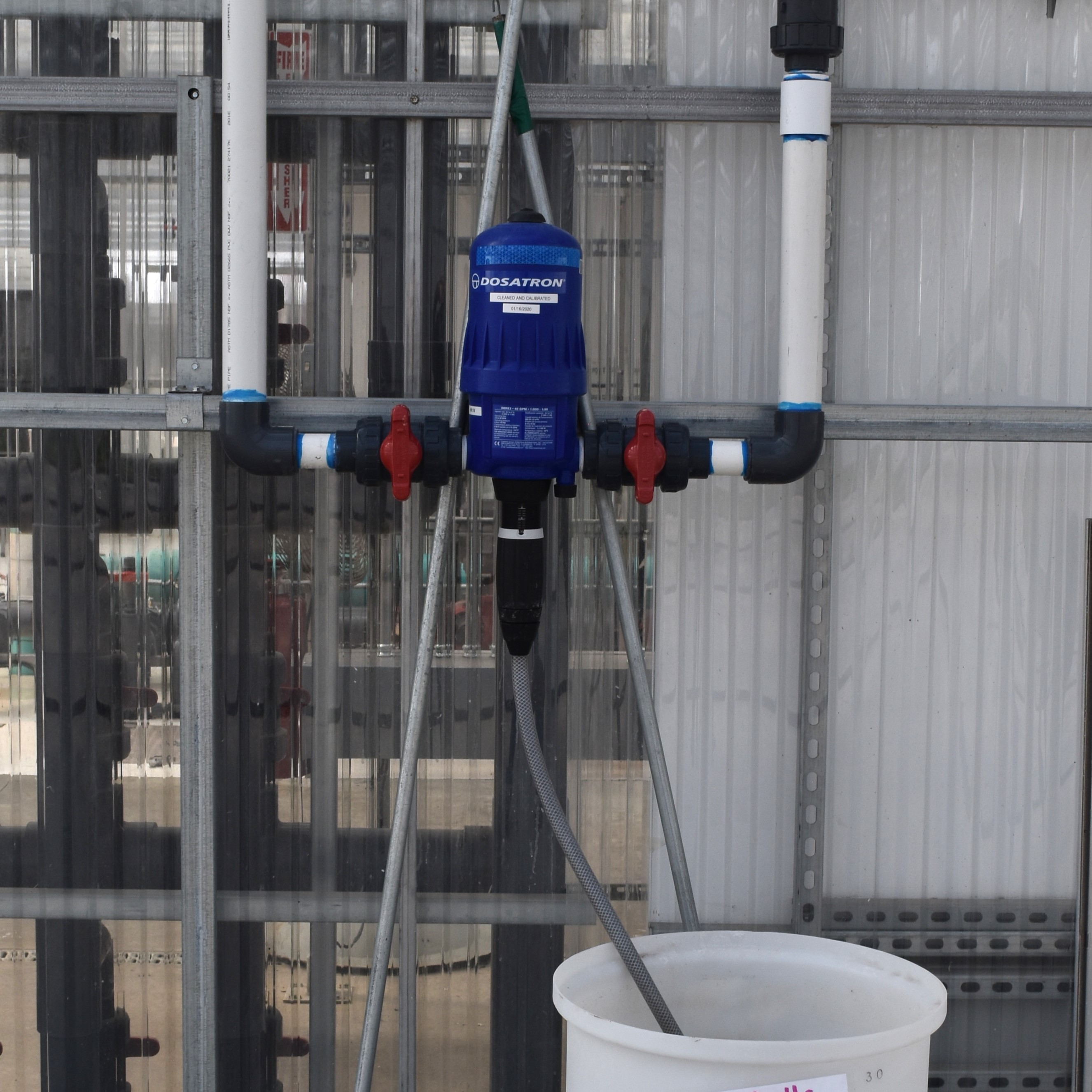
Fertilizer injectors are among the most important pieces of equipment in a greenhouse or nursery irrigation system. As garden mums, fall bedding plants, and poinsettia crops move through production, an injector that is not operating correctly can result in crops receiving too little or too much fertilizer. The consequences can include pale foliage, slow or uneven growth, low or excessive substrate electrical conductivity (EC), nutrient deficiencies or toxicities, and unnecessary fertilizer costs.
Do not assume that an injector set at 1:100 is actually delivering a 1:100 dilution ratio. Worn injector components, clogged suction filters, air in the suction line, debris in the stock tank, poor stock-solution mixing, and changes in water flow or operating pressure can all affect injector performance. Before increasing fertilizer concentration in response to a crop nutrition issue, verify that the injector and stock solution are functioning as intended. There are two methods in which you can check your fertilizer injector.
The flow method is a practical way to determine whether the injector is drawing the correct amount of concentrated stock solution. Fill a graduated cylinder with a known volume of stock solution, place the injector suction line into the cylinder, and collect a known volume of diluted fertilizer solution under normal operating conditions. Divide the volume of diluted solution collected by the volume of stock solution used to calculate the actual injector ratio. For example, if 640 fl oz (5 gallons) of diluted fertilizer solution is collected and the injector uses 6.4 fl oz of stock solution, the actual injector ratio is 1:100.
The EC method provides a second check by verifying the fertilizer concentration delivered to the crop. First, calibrate your EC meter and measure the EC of the clear irrigation water. Next, allow fertilizer solution to run through the hose or irrigation line long enough to displace the clear water, collect a sample at the end of the line, and measure nutrient solution EC. Subtract the source-water EC from the fertilizer-solution EC, then compare that value with the fertilizer manufacturer’s chart for the intended fertilizer concentration and injector setting.
The flow and EC methods answer different questions. The flow method determines whether the injector is operating at the correct dilution ratio, whereas the EC method determines whether the final fertilizer solution is at the intended strength. When the flow test is correct, but the EC is not, the problem may be related to stock-solution preparation, fertilizer measurement, or source-water quality rather than injector operation.
Checking injectors should be part of routine irrigation-system management, not something done only after a nutritional problem develops. Calibrate injectors before crop production, after maintenance or repairs, when changing fertilizer formulations or injector settings, and whenever irrigation flow or pressure changes. Confirming injector performance before making fertility adjustments helps ensure that garden mums, poinsettias, and other fall crops receive the fertilizer program you intend to deliver.
For more information, refer to e-GRO Alert 12.33: Verifying the Proper Functioning of Fertilizer Injectors.
About the Author:
W. Garrett Owen is an Assistant Professor of Sustainable Greenhouse and Nursery Systems in the Department of Horticulture and Crop Science at The Ohio State University. He has an appointment in research, teaching and Extension. His area of expertise is plant nutrition; plant growth regulation; and production problem diagnostics.

W. Garrett Owen
Assistant Professor of Sustainable Greenhouse and Nursery Systems, The Ohio State UniversityW. Garrett Owen is an Assistant Professor of Sustainable Greenhouse and Nursery Systems in the Department of Horticulture and Crop Science at The Ohio State University. He has an appointment in research, teaching and Extension. His area of expertise is plant nutrition; plant growth regulation; and production problem diagnostics.