
Dont Get Burned with Calcium Sprays on Strawberry Plants
Strawberry tip burn is a common disorder, particularly
in greenhouse or hydroponic systems, characterized by necrotic, browning, and
curling tips on young leaves or fruit calyxes. Because calcium moves passively through
plants and is transported with the flow and loss of water through transpiration,
tip burn results from a localized calcium deficiency in rapidly growing tissue.
Unlike the tip burn associated with lettuce, low nighttime relative humidity
(high vapor pressure deficit) in strawberries can lead to tip burn. If
increasing nighttime relative humidity is not possible, periodic foliar calcium
sprays may be your next best option. Apply to "glisten” (not runoff) and be
sure to mix in a wetting agent labelled for food crops to ensure the solutions spread
out across the leaf surface. Adding a wetting agent to the solution will help increase
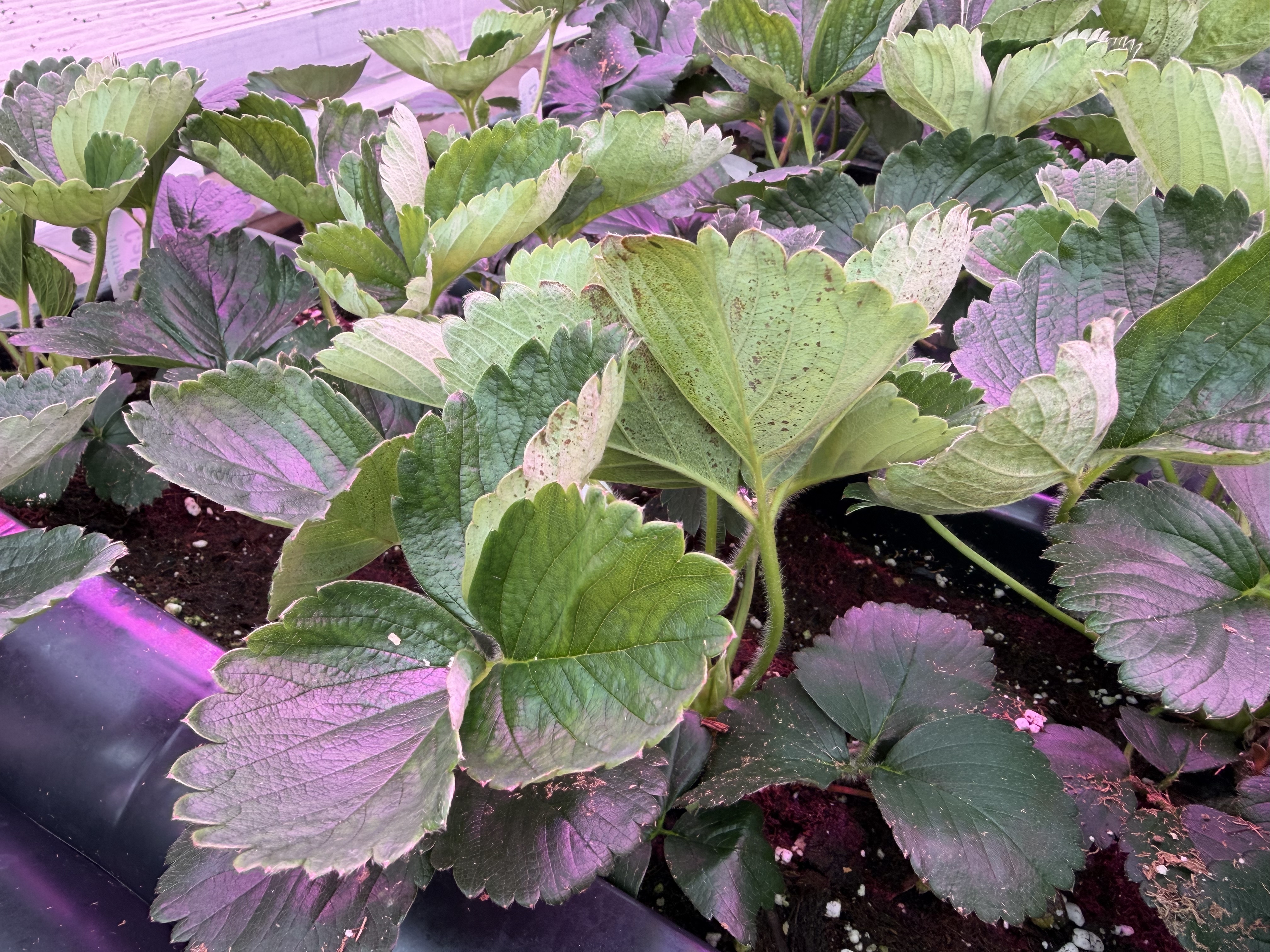
the absorption and reduce the risk of phytotoxicity. Sprays should not be made in the early morning
when temperatures are below 80 °F, and preferably on a cloudy day, to prevent spotting (phytotoxicity) on the underside of leaves as shown in this photo.
Roberto Lopez
Associate Professor and Floriculture/Controlled Environment Extension Specialist, Michigan State UniversityRoberto G. Lopez is an Associate Professor and Floriculture/Controlled Environment Extension Specialist at Michigan State University. He has an appointment in research, teaching and extension. His area of expertise is; controlled environment specialty crop production; Lighting applications for greenhouses and indoor vertical production; light-emitting diodes; young plant propagation.
