
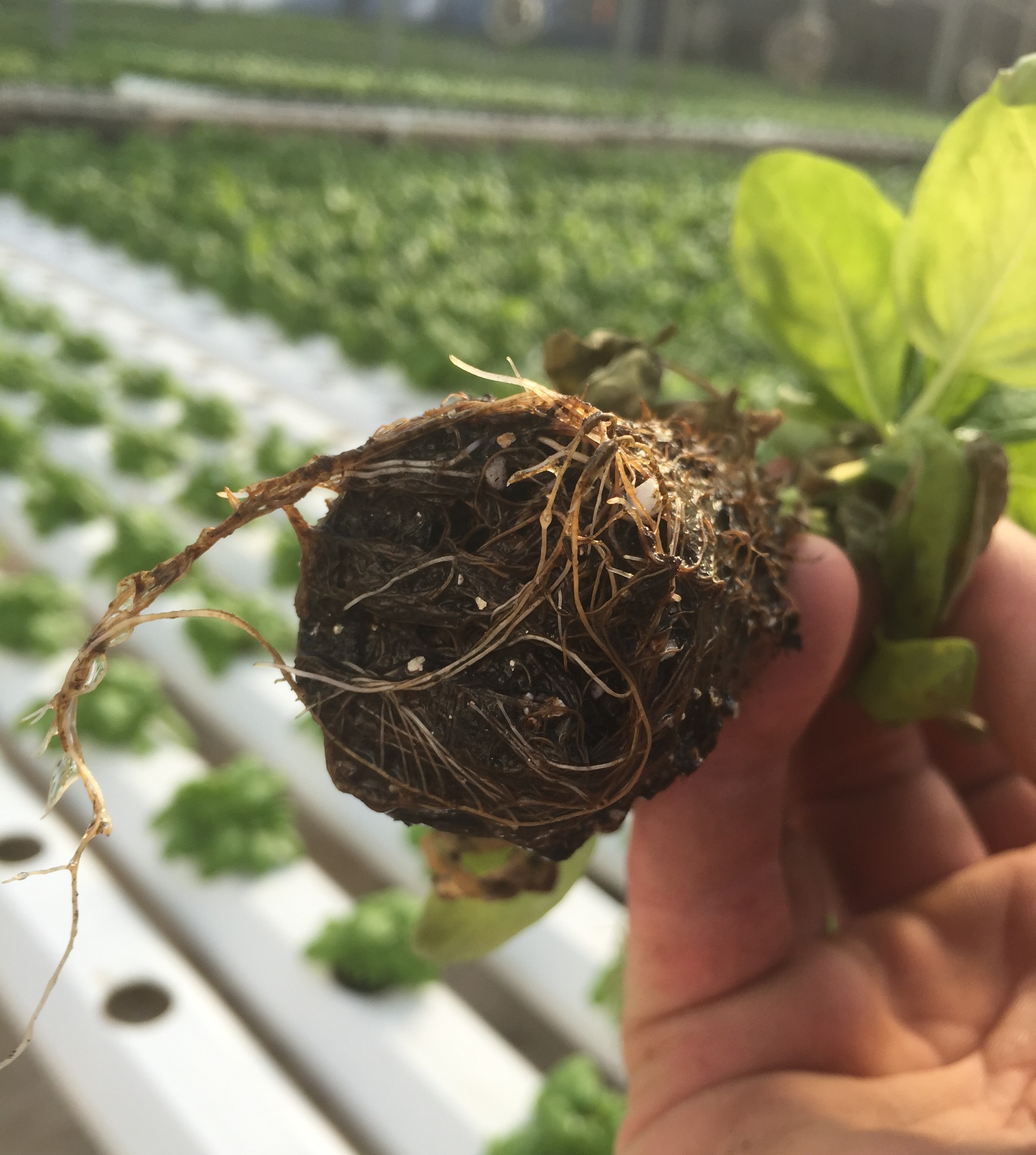
Check your roots and scout for disease
It is hot and humid across much of the USA. Heat and high humidity within enclosed production facilities are favorable for disease development. Botrytis, powdery mildew, fungal and bacterial leaf spots, and root disease are common. Crops should be scouted for early symptoms and signs of plant diseases with emphasis on lower leaves. In hydroponic operations, higher temperatures stress root growth and can enhance Pythium root rot during summer months.
Pythium aphanidermatum and P. myriotylum thrive in warm conditions. Using chillers to cool water temperatures to 68-72°F can reduce Pythium root rot disease development. However, hot conditions make it difficult to maintain cooler water temperatures as water moves through hydroponic systems. Lettuce, spinach, basil, thyme and other herbs are very susceptible to Pythium infection. Several e-GRO Alerts addressed disease management within hydroponics and controlled environment systems including 'Root disease management in hydroponics' (https://e-gro.org/pdf/E706.pdf), 'Common diseases of hydroponic leafy greens and herbs' (https://e-gro.org/pdf/E701.pdf), and 'Biofungicides for control of root diseases of greenhouse-grown vegetables' (https://e-gro.org/pdf/E207.pdf). Take a look at the Alerts for helpful information to reduce crop losses.
Jean Williams-Woodward
Associate Professor and Extension Plant Pathologist, University of WyomingJean is an Associate Professor, Extension Plant Pathologist, and Director of the the Extension Plant Diagnostic Lab at the University of Wyoming beginning in 2025. Jean was previously at the University of Georgia for 29 years as an Extension Plant Pathologist providing plant disease diagnosis and management recommendations for ornamental plants in greenhouses, nurseries, and landscapes. She brings over 29 years of experience in working with ornamental plant producers and extension outreach providing education programs and on-site plant problem diagnostics.